As part of their studies, second-year MBA students at CMH Paris, an international hospitality management school, took on an ambitious challenge: to design, as a team, a new hotel establishment. Led by their professor Maëlis Lecomte, this educational project aimed to immerse them in every dimension of hotel entrepreneurship — from developing a business plan to creating a restaurant menu, all the way through to building a physical model.
“Few hospitality schools go as far as creating a physical model. It allows students to truly experience their project.”
Maëlis Lecomte, CMH Paris
An immersive approach that left a strong impression on the students:
“ I loved the idea of adding a creative and playful dimension to a project that could have remained purely theoretical, and being able to bring it to life.”
Odile Casoli, student at CMH Paris
AERPANEL, a partner in student creativity
As a partner of this initiative, AERPANEL provided the essential materials for building the models: foam board, balsa wood, and cutting tools. Easy to work with and perfectly suited for designing 3D volumes, the foam board AIRPLAC enabled students to bring exceptional spaces to life, faithfully translating their hotel concepts.
Students also benefited from the guidance of professionals, Pierre-Louis Huet and Maxime Pontonnier from the Orion Architectures Agency, who supported them throughout the design and construction of their models.
“Having partners like AERPANEL helps boost students’ motivation. They feel supported by professionals who help them see their project through to completion.”
Maëlis Lecomte, CMH Paris
“It takes them out of their very cerebral daily routine. Building something with their own hands allows them to better understand the decisions involved in designing a space.”
Orion Architectures
The projects were then presented to a jury composed of professionals from leading hotel groups and Parisian palaces such as the Ritz, the Crillon, and the Prince de Galles.
Beyond the academic exercise, this stage allowed students to defend their vision using a strong and tangible visual support.
The models created demonstrate not only the students’ creativity, but also the accessibility and versatility of foam board, even for those without a background in applied arts or architecture.
Passing on expertise and supporting new generations are core values for AERPANEL. The company is proud to have contributed to the first edition of The Hotel War, an initiative set to continue.
An enriching experience for these young participants, at the crossroads of creativity, technical skills, and entrepreneurship, perfectly illustrating the added value of model-making in training future hospitality professionals.
Take a look at these projects in pictures:
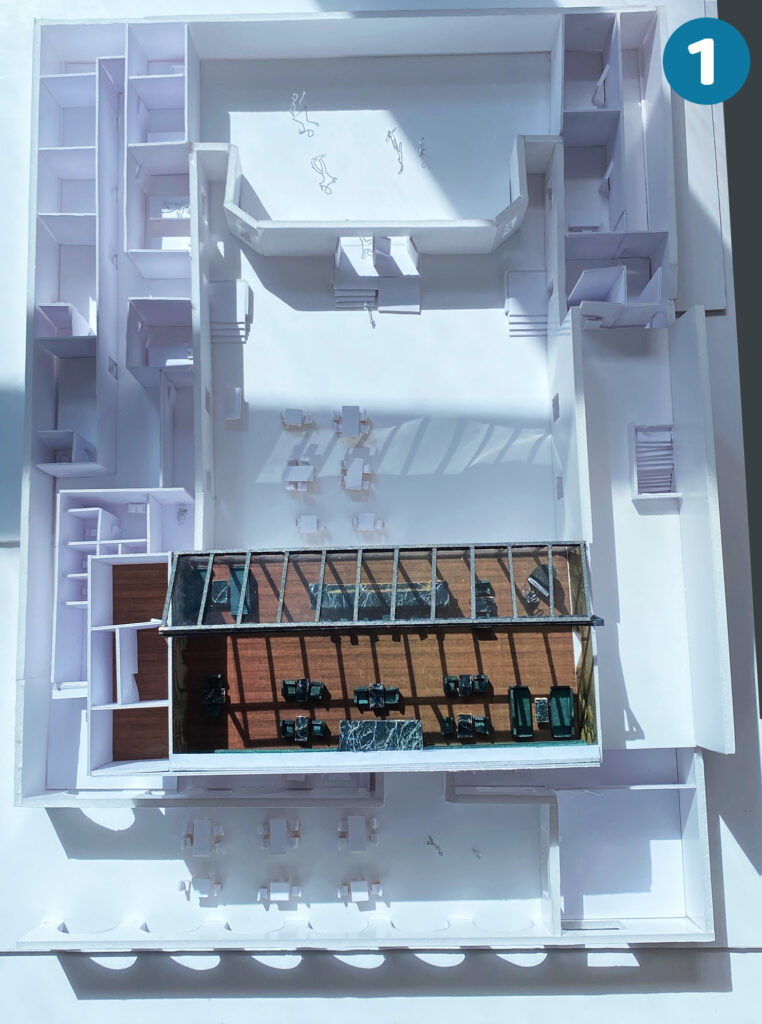
1. General model – reading the plan
Based on a floor plan and elevation of the building, this model provides an overview that clearly illustrates the layout of the spaces and visitor flow. Load-bearing walls are constructed from 5 mm foam board, whilst partition walls are made from 3 mm foam board.
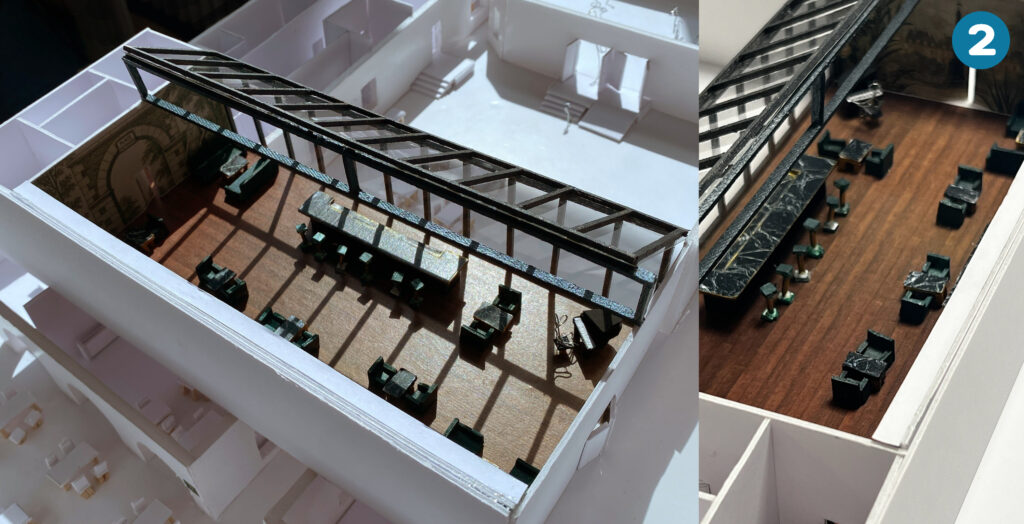
2. Close-up of the mezzanine with its glass roof.
The furniture, carved from balsa wood and painted in dark glass tones, is complemented by tables finished with a faux marble effect. The back wall is covered with a photocopy designed to resemble panoramic wallpaper.
The use of light is key here: the shadows cast by the glass roof enhance the model’s realism.
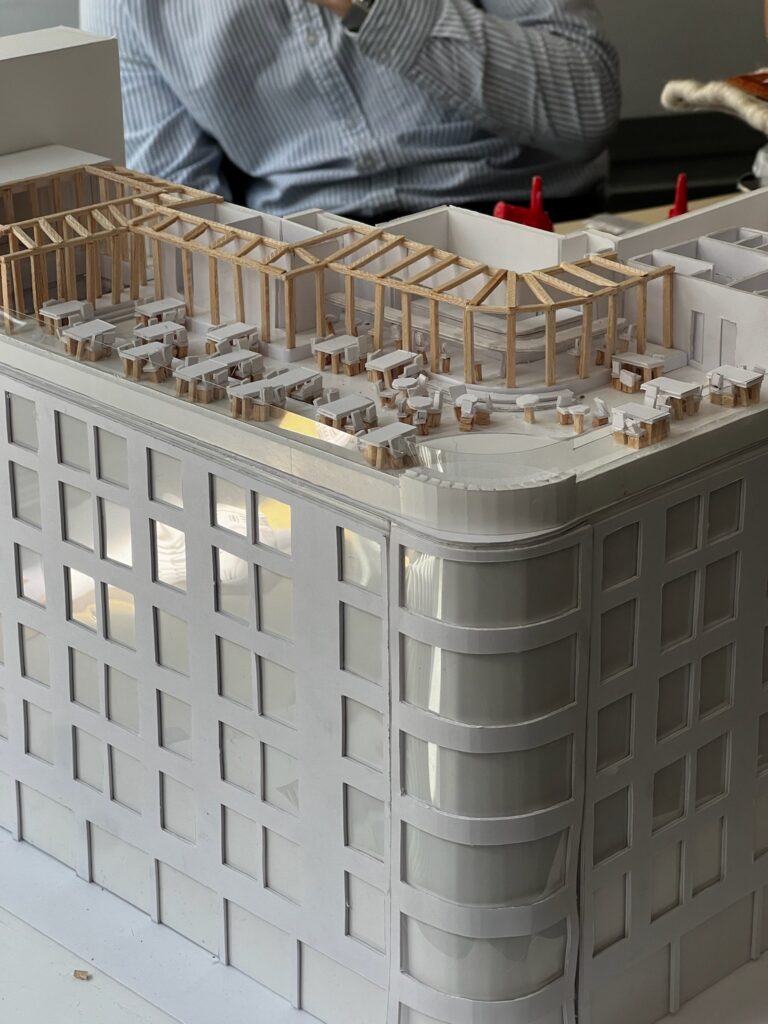
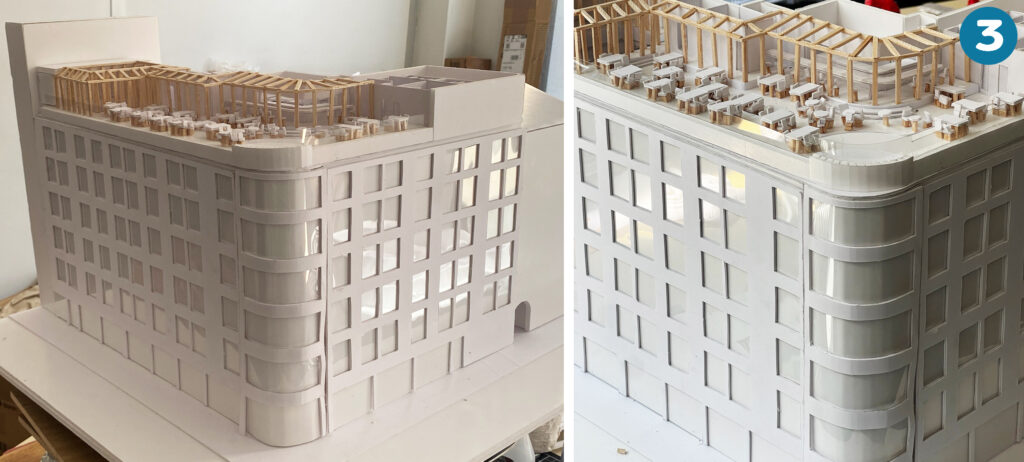
3. Model of a hotel façade.
Here, the building’s façade has been constructed in several layers. The external walls were made from foam board, with grooves cut into them to facilitate the rounded corners. A layer of Rhodoid was then inserted before a second, thin façade was cut from low-thickness foam board. This creates a mirror effect for the windows using the thickness of the structure. On the roof, the terrace is constructed from foam board and balsa wood strips.
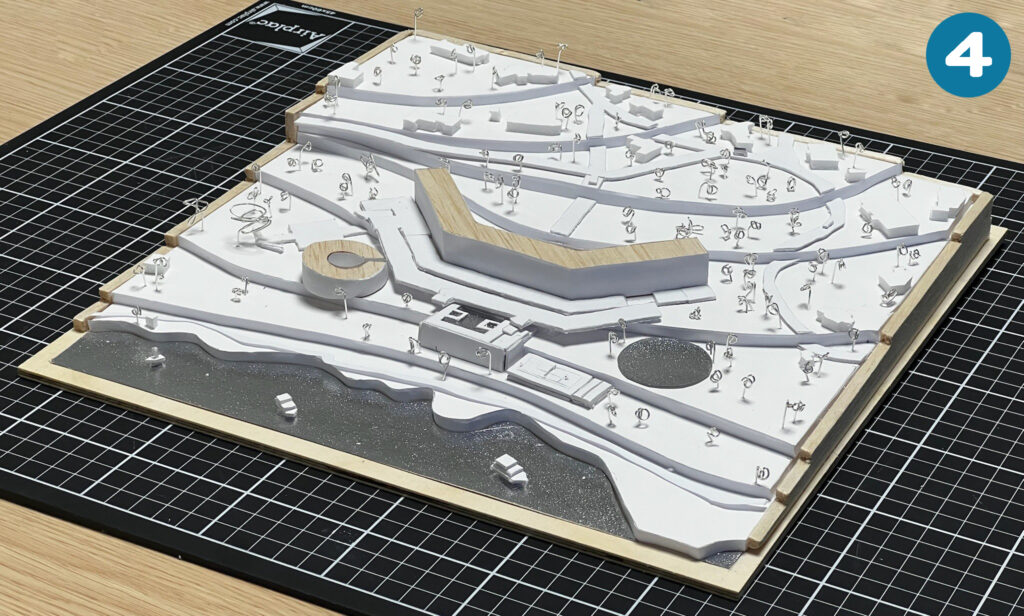
4. Site layout.
This model situates the building within its surroundings. The topography of the site is represented by successive layers, from the higher ground down to the seashore. The sea is depicted using mirrored paper, dotted with stylised boats made from foam board. The trees are made from wire embedded in the foam.
The hotel’s roof, covered with balsa veneer — the only wooden element in the model — naturally draws the eye and invites a bird’s-eye view of the plan to understand the layout of the spaces.
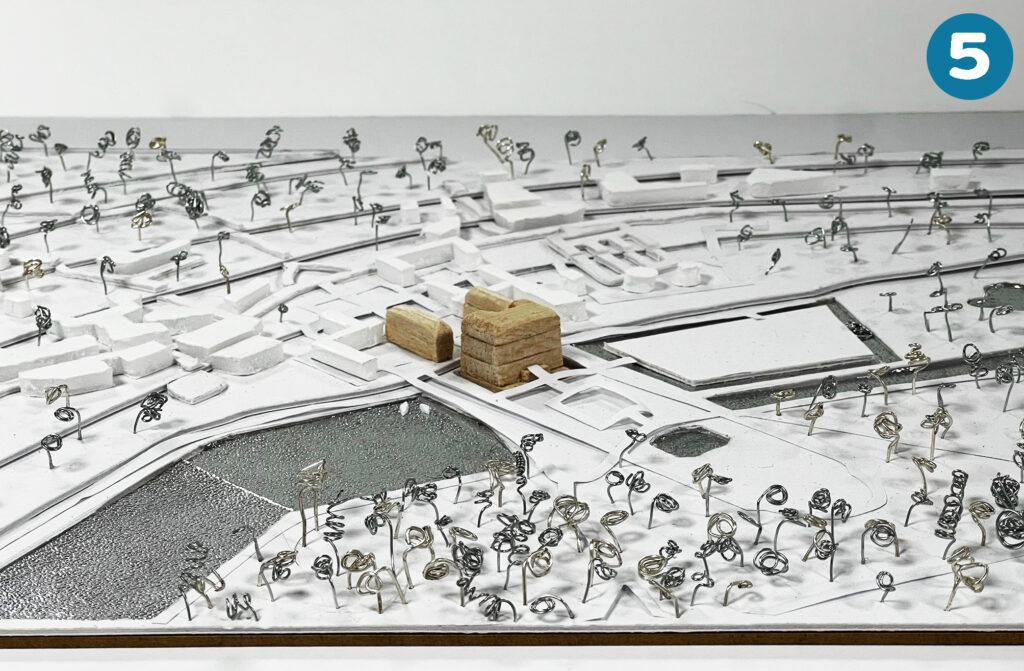
5. Integration into an urban plan.
In this model, the hotel is clearly distinguished by its wooden cladding, which is sculpted and stands out from the rest of the urban fabric, rendered exclusively in white using paper and foam board.
The surrounding buildings have been deliberately simplified to focus attention on the hotel. The river is represented by mirrored paper, and the trees by wire or annealed metal.
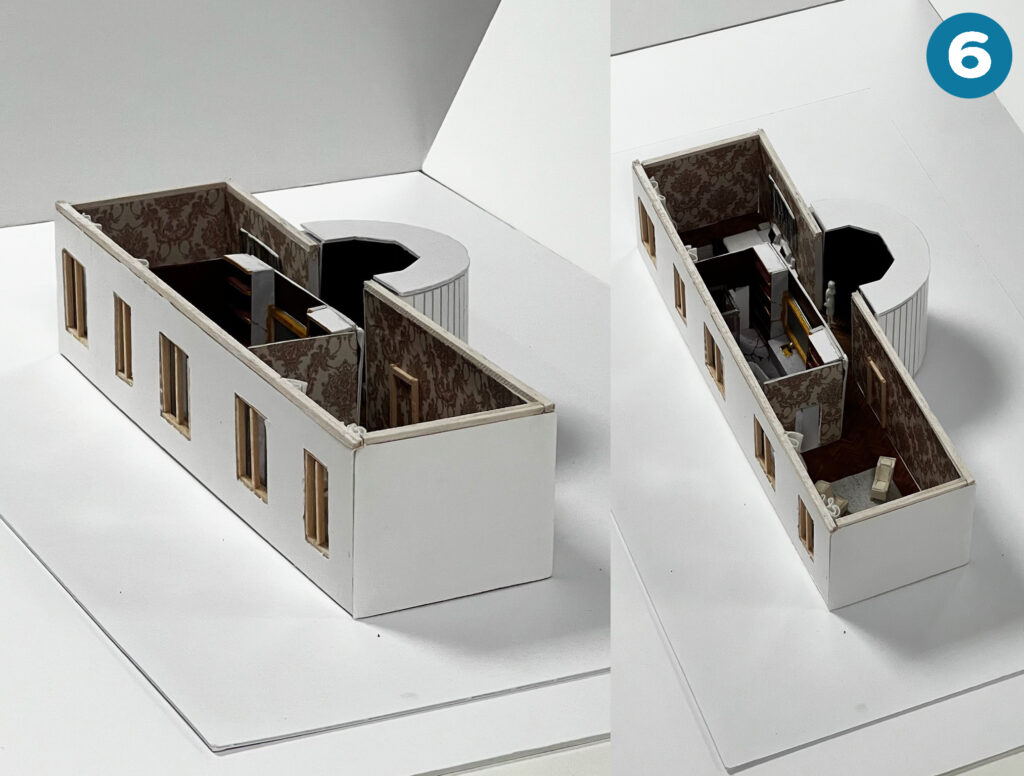
6. Detail of a suite.
Following an overview of the building, this model focuses on a suite to convey the hotel’s interior atmosphere. Treated as a three-dimensional elevation, this detail uses the same design elements as the overall model: thicker load-bearing walls and a top-down view of the floor plan.
The materials are suggested by photocopies to symbolise the Hungarian parquet flooring in the bedroom and the marble in the bathroom. The walls are covered with wallpaper. A few textile elements represent cushions, pillows, curtains and rugs. The bathroom is enhanced with balsa wood strips painted with metallic finishes for the shower and mirror. The door and window frames are also crafted from balsa wood strips. More realistic figures, made from moulded plastic, add a human touch. One can also appreciate the rounded edges achieved through regular vertical grooving of the foam board.
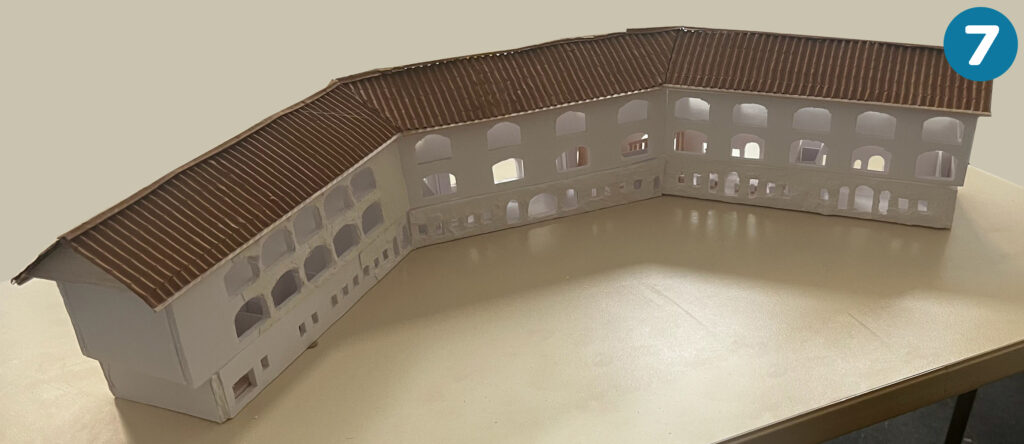
7. Playing with materials.
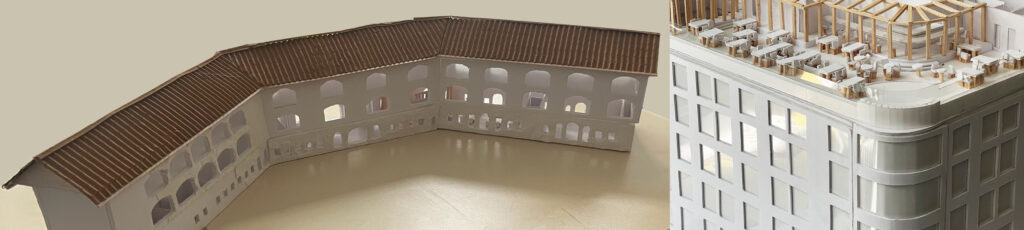
This model perfectly illustrates the use of simple materials to recreate instantly recognisable architectural features. The white foam board façades evoke whitewashed walls, with openings in the style of old arches.
To accentuate the building’s weathered appearance, the paper surface of the foam board has been deliberately torn in places, evoking slightly weathered render. One can almost imagine a cloistered corridor behind these repetitive windows.
The use of corrugated cardboard to represent a tiled roof is very ingenious! The balsa wood finish on the ridge and guttering refines the overall effect and gives this model the appearance of a traditional building without requiring much effort in creating the scenery.
“Hand-drawn plans and models always bring a soul to the project.” Orion Architectures